

| Communication team
trans4num at the EUFRAS General Assembly
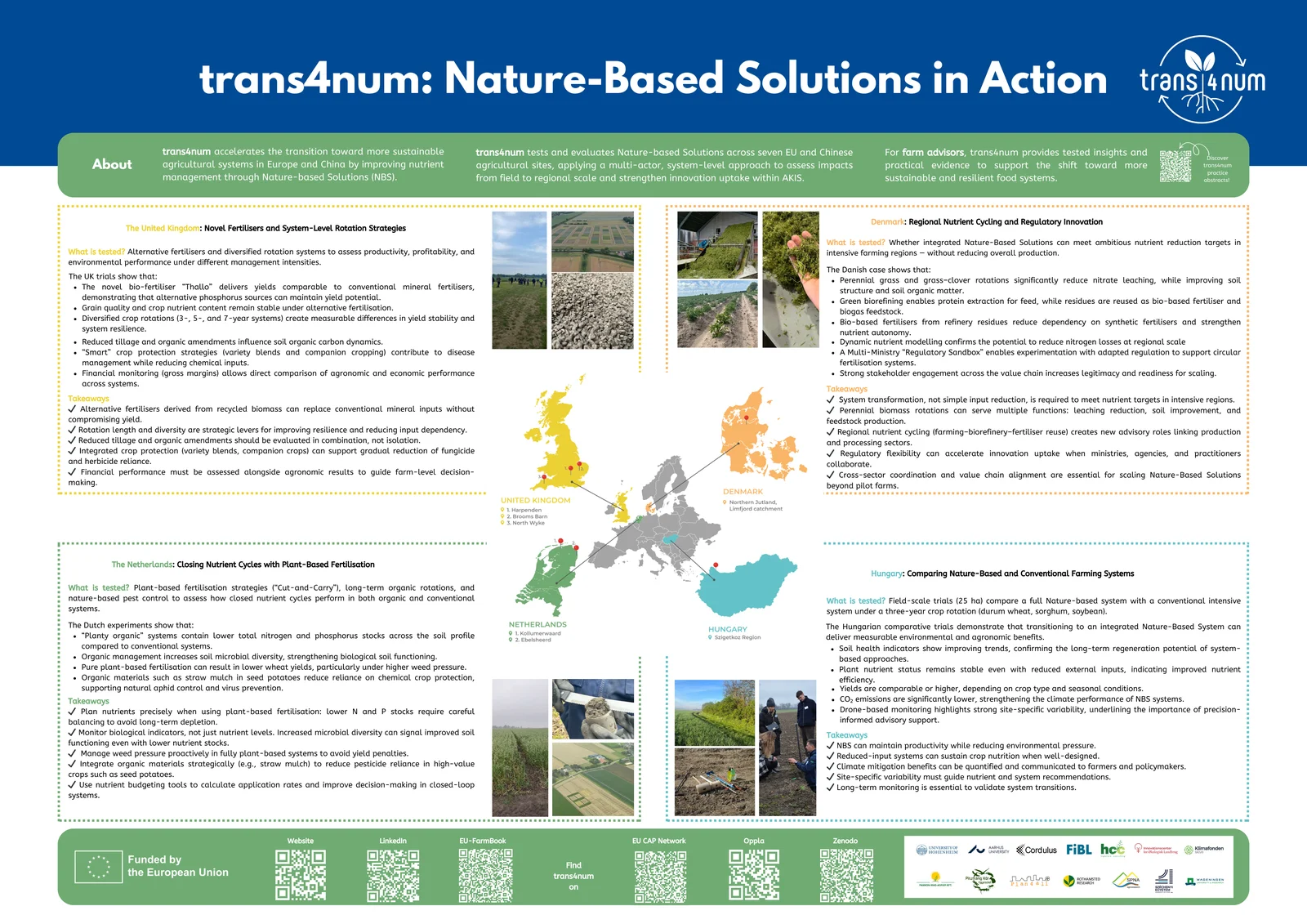
trans4num was presented at the EUFRAS General Assembly through a dedicated poster highlighting the project’s practical value for farm advisors and their central role in accelerating the uptake of Nature-Based Solutions (NBS) across Europe.
The poster, titled “trans4num: Nature-Based Solutions in Action”, showcased results from field-scale trials in four countries (Hungary, the Netherlands, the United Kingdom and Denmark) demonstrating how improved nutrient management can deliver environmental, agronomic and economic benefits.
Country Highlights
Hungary – Comparing Nature-Based and Conventional Systems
Field-scale (25 ha) trials comparing a full Nature-Based Solutions system with a conventional intensive system show measurable environmental and agronomic benefits. Soil health indicators are improving, nutrient efficiency remains stable despite reduced external inputs, and CO₂ emissions are significantly lower in NBS systems. Results confirm the long-term regenerative potential of system-based approaches.
The Netherlands – Closing Nutrient Cycles with Plant-Based Fertilisation
Trials on plant-based fertilisation (“Cut-and-Carry”), long-term organic rotations and nature-based pest control demonstrate that nutrient cycles can be effectively closed. Organic systems show increased soil microbial diversity and reduced nitrogen and phosphorus stocks, requiring precise nutrient planning. Straw mulch in seed potatoes reduces chemical crop protection needs, supporting natural aphid control.
United Kingdom – Novel Fertilisers and Diversified Rotations
Testing alternative fertilisers and diversified crop rotations shows that recycled bio-fertilisers such as “Thallo” can maintain yields and grain quality comparable to mineral fertilisers. Longer and more diverse rotations improve resilience, while reduced tillage, organic amendments and smart crop protection strategies (variety blends, companion cropping) support gradual input reduction. Economic monitoring confirms the importance of assessing gross margins alongside agronomic performance.
Denmark – Regional Nutrient Cycling and Regulatory Innovation
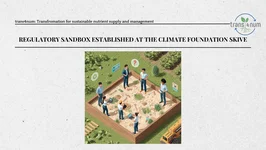
The Danish case demonstrates how integrated Nature-Based Solutions can meet ambitious nutrient reduction targets without reducing production. Perennial grass and grass–clover rotations reduce nitrate leaching and improve soil organic matter. Green biorefining enables protein extraction for feed, with residues reused as bio-based fertiliser and biogas feedstock. A multi-ministry “Regulatory Sandbox” supports experimentation with circular fertilisation systems, highlighting the importance of cross-sector coordination.
By presenting concrete field evidence and advisory-relevant takeaways, trans4num underlined at EUFRAS the importance of equipping advisors with tested tools, nutrient budgeting approaches, biological indicators, and system-level insights to guide farmers through sustainable transitions.
For more information, discover the trans4num practice abstracts and project resources.